Call us now :07971891170( PIN:297)
 Send Inquiry
 Send Inquiry
Refractory Castable Cement
MOQ : 1 Pack
Refractory Castable Cement Specification
- Usage & Applications
- Suitable for high temperature lining, patching, construction of refractory monolithic structures
- Application
- Industrial furnaces, Kilns, Boilers, Lining of ladles and tundish, Incinerators
- Density
- 2.4 Gram per cubic centimeter(g/cm3)
- Form
- Dry, ready-to-mix powder
- Melting Point
- Above 1400°C
- Water Absorption
- Below 5%
- Purity(%)
- Greater than 98%
- Surface Finish
- Smooth when applied and set
- Chemical Composition
- Al2O3, SiO2, CaO, Fe2O3
- Hardness (%)
- Above 95%
- Types of Refractories
- Castable Refractories
- Shape
- Powder
- Porosity
- 18 - 22%
- Dimensional Stability
- Excellent, retains shape under high temperature
- Strength
- High mechanical strength; Cold Crushing Strength (CCS): > 250 kg/cm²
- Specific Gravity
- 2.6 - 2.8
- Thermal Conductivity
- Low; 0.8-1.3 W/mK at 1000°C
- Color
- Grey
- Installation Method
- Mix with water and cast, vibrate into molds
- Packaging Type
- Bags (25kg, 50kg)
- Shelf Life
- 12 months in unopened packaging
- Storage Conditions
- Store in dry, cool place
- Compressive Strength at 110C
- > 30 MPa
- Bonding System
- Hydraulic/Aluminous cement
- Setting Time
- Initial: 30 minutes; Final: 8 hours
- Abrasion Resistance
- Excellent for high-wear applications
- Expansion
- Very low linear expansion
Refractory Castable Cement Trade Information
- Minimum Order Quantity
- 1 Pack
- Supply Ability
- 1 Pack Per Day
- Delivery Time
- 1 Days
About Refractory Castable Cement
Refractory Castable Cement is a versatile refractory material used in a variety of high-temperature applications. It is a mixture of refractory aggregates, binders, and additives, which can be mixed with water to form a fluid mass. After installation, it undergoes a curing process and hardens into a solid structure, providing excellent thermal insulation and resistance to heat, abrasion, and chemical attack.
FAQs :
Q: What are the main properties of Refractory Castable Cement?
A: Refractory Castable Cement exhibits several key properties, including high refractoriness, thermal shock resistance, excellent strength at high temperatures, good thermal insulation, and resistance to abrasion and chemical erosion. These properties make it suitable for lining furnaces, kilns, boilers, incinerators, and other high-temperature industrial equipment.
Q: Where is Refractory Castable Cement commonly used?
A: Refractory Castable Cement finds extensive use in various industries, including steel, cement, glass, ceramics, petrochemicals, and power generation. It is commonly used to line and repair refractory structures in furnaces, kilns, chimneys, ladles, and other equipment that operate at elevated temperatures.
Q: What are the advantages of using Refractory Castable Cement?
A: The advantages of Refractory Castable Cement include its ability to conform to complex shapes, easy installation and repair, high thermal efficiency, excellent resistance to thermal shocks, and adaptability to different operating conditions. It offers a cost-effective solution for creating and maintaining refractory linings in demanding environments.
Q: How is Refractory Castable Cement installed?
A: Refractory Castable Cement is typically installed by mixing it with water to form a fluid consistency. The mixture is then poured, gunned, or troweled onto the desired surface, forming the refractory lining. After installation, it goes through a curing process, which involves controlled drying or heating, allowing it to harden and develop its desired properties.
Why Choose Refractory Castable Cement?
Designed for industrial-scale resilience, this castable cement boasts exceptional mechanical strength, minimal linear expansion, and superior abrasion resistance, making it the preferred lining material for furnaces, kilns, and related equipment. Its low thermal conductivity ensures both energy efficiency and effective heat containment, while the high purity composition ensures performance even in extreme thermal and chemical environments.
Easy Storage and Longevity
Refractory Castable Cement comes in moisture-resistant, 25kg or 50kg bags, facilitating straightforward storage and handling. It offers a shelf life of up to 12 months when kept unopened in a cool, dry place. Proper storage maintains its workability and chemical characteristics, ensuring reliable results even months after purchase.
Versatility in Application
Suitable for construction and patching of monolithic refractory structures, this powder-form cement serves manufacturers, dealers, and end users in the Indian industrial sector. Its adaptability with various installation techniquescasting and vibrating into molds with waterallows for precise and durable linings across specialized equipment such as furnaces, boilers, and incinerators.
FAQs of Refractory Castable Cement:
Q: How should Refractory Castable Cement be mixed and installed?
A: To prepare the castable, gradually add the powdered cement to clean water, following the recommended water ratio, and mix thoroughly to a uniform consistency. The slurry should be cast and vibrated into molds. Proper compaction and vibration ensure a dense, strong lining after setting.Q: What packaging options are available for this cement?
A: Refractory Castable Cement is supplied in secure, moisture-resistant bags of 25kg and 50kg, suitable for handling by dealers, distributors, and end users across India.Q: When is the product ready for use after mixing, and how long does it take to set?
A: The initial setting occurs within 30 minutes, allowing for shaping and installation. Complete setting is achieved within 8 hours, making it suitable for projects that require both efficient application and reliable structural strength.Q: Where can this castable cement be used?
A: It is ideal for lining industrial furnaces, kilns, boilers, ladles, tundishes, and incinerators. Thanks to its low expansion, high mechanical strength, and thermal stability, it is suitable for demanding industrial applications.Q: What benefits does Refractory Castable Cement provide under high temperature conditions?
A: The cement assures excellent dimensional stability, high compressive strength, and minimal thermal conductivity, ensuring reliable performance and longevity of high-temperature linings. Its resistance to wear and chemical attack enhances equipment durability and operational safety.Q: How should unopened bags be stored to maximize shelf life?
A: Store the bags in a dry, cool area to maintain their shelf life of up to 12 months. Avoid exposure to moisture and direct sunlight, which can compromise the products properties before application.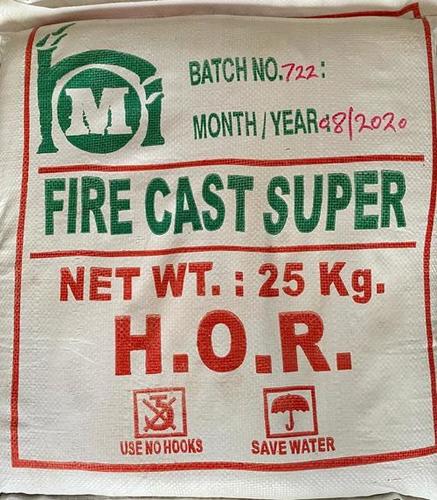
More Products in Refractory Cement And Castables Category
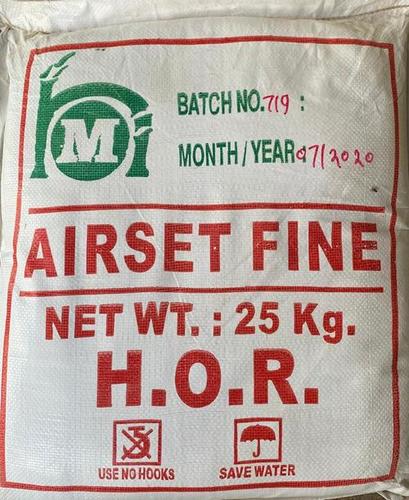
REFRACTORY CASTABLES
Minimum Order Quantity : 1 Pack
Shape : Other, Powder / Granules
Application : Furnace Lining, Boilers, Kiln, Burner Block, and Cement Rotary Kilns
Strength : High Compressive Strength (Typically > 70 kg/cm2)
Product Type : Other, Refractory Castable
Types of Refractories : Other, Low Cement, Conventional, Insulating, Dense, and Special Castables
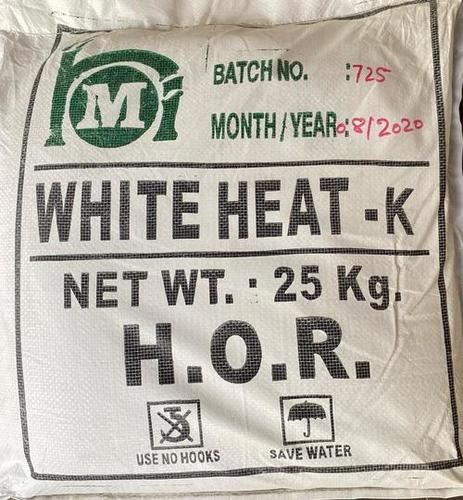
Castable Refractory
Minimum Order Quantity : 1 Pack
Shape : Other, Powder/Granular
Application : Used in lining furnaces, kilns, incinerators, and reactors
Strength : High compressive strength
Product Type : Other, Castable Refractory
Types of Refractories : Other, Conventional and Low Cement Castables
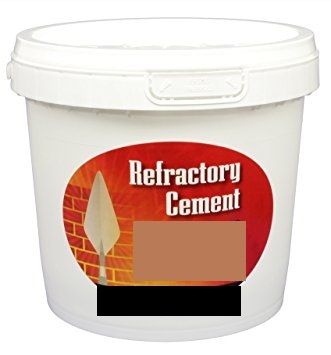
Refractory Cement
Shape : Other, Powder or paste
Application : Hightemperature settings furnaces ovens kilns etc.
Strength : High compressive strength
Product Type : Other, Refractory Cement
Types of Refractories : Other, Monolithic Refractories

We mainly deal in Chandigarh, Delhi, Haryana, Himachal Pradesh, Jammu and Kashmir, Madhya Pradesh, Uttar Pradesh, Punjab, Rajasthan, Uttarakhand etc.

 Send Inquiry
Our Products
- Refractory Material
- Boiler Nozzle And Spare Parts
- High Alumina Products
- Fire Bricks
- Refractory Cement And Castables
- Thermax Refractory Bricks
- Furnace Refractory
- Boiler Refractories
- Refractory Bed Material
- Refractory Bricks Joining Service
- Refractory Lining
- Thermax Boiler Construction Service
- Boiler furnace Work

Plot No. 2, Samaypur Road, Rajeev Colony, Near Sector-58,Faridabad - 121004, Haryana, India

Mr Kapil Vashisht
(CEO)
Mobile :View Number
 Send Inquiry
 Send SMS
Developed and Managed by Infocom Network Private Limited.