Call us now :07971891170( PIN:297)
 Send Inquiry
 Send Inquiry
Thermax Refractory Brick
Thermax Refractory Brick Specification
- Material
- High Alumina
- Shape
- Rectangular
- AI2O3(%)
- 70%
- Fe2O3 (%)
- 2.5%
- Refractoriness
- 1750°C
- Characteristics
- High thermal stability, corrosion resistance, abrasion resistance
- Color
- Light Brown
- Bulk Density
- 2.3 g/cm3
- Resistance to Thermal Shock
- Excellent
- Cold Crushing Strength
- 350 kg/cm2
- Width
- 114 mm
- Thickness
- 80 mm
- Usage/Application
- High-temperature furnaces, kilns, and incinerators
- Length
- 230 mm
- Apparent Porosity
- 23%
About Thermax Refractory Brick
Thermax Refractory Brick
This Thermax Refractory Brick is manufactured using the best quality raw materials and sophisticated machines by a team of skilled professionals. Our offered brick is chemically and physically quite stable at high temperature. Owing to its ability to withstand heat combination exposure continuously, this brick is used in lining furnaces, fireboxes, fireplaces, and kilns. Along with this, the provided brick can be availed from us in various designs and dimensions i.e. length, width, and height.
Key points:
This Thermax Refractory Brick is manufactured using the best quality raw materials and sophisticated machines by a team of skilled professionals. Our offered brick is chemically and physically quite stable at high temperature. Owing to its ability to withstand heat combination exposure continuously, this brick is used in lining furnaces, fireboxes, fireplaces, and kilns. Along with this, the provided brick can be availed from us in various designs and dimensions i.e. length, width, and height.
Key points:
- Admired for low thermal conductivity to provide greater energy efficiency
- Suitable for extreme mechanical, chemical and thermal stresses applications
- Each dimension is perfectly finished in accurate size
Engineered for Extreme Thermal Conditions
Thermax Refractory Bricks are meticulously crafted using high alumina material to perform reliably under very high temperatures. Their excellent resistance to thermal shock and corrosive atmospheres makes them a preferred choice for furnaces, kilns, and incinerators, guaranteeing longevity and consistent performance even in the most challenging environments.
Advanced Material Composition for Superior Performance
With 70% Al2O3 and only 2.5% Fe2O3, these bricks offer impressive refractoriness and maintain their integrity up to 1750C. The design incorporates high thermal stability and low apparent porosity (23%), resulting in reduced heat loss and enhanced operational efficiency for industrial applications.
FAQs of Thermax Refractory Brick:
Q: How should Thermax Refractory Bricks be installed in high-temperature equipment?
A: Thermax Refractory Bricks are usually installed by arranging them in specific patterns within the lining of furnaces, kilns, or incinerators. Proper alignment and use of compatible refractory mortar are crucial for ensuring thermal efficiency, structural stability, and protection against heat-induced damage.Q: What benefits do Thermax Refractory Bricks provide in industrial furnaces and kilns?
A: These bricks offer high thermal stability, corrosion and abrasion resistance, and excellent thermal shock resistance, resulting in extended equipment life, improved energy efficiency, and minimized downtime due to maintenance or repairs.Q: When should high alumina refractory bricks such as Thermax be selected over other types?
A: High alumina bricks like Thermax are ideal for situations requiring high refractoriness, up to 1750C, and environments exposed to severe abrasion, corrosion, or thermal cycling, such as steel plants, cement kilns, and incineration chambers.Q: Where are Thermax Refractory Bricks most commonly used?
A: These bricks are widely utilized in high-temperature unitsincluding furnaces, kilns, and incineratorsacross industries such as metallurgy, glass, and cement manufacturing throughout India.Q: What is the process involved in manufacturing Thermax Refractory Bricks?
A: The bricks are produced by blending high-grade alumina and select materials, molding them into precise rectangular shapes, and firing at high temperatures. This process ensures optimal density, low porosity, and consistent structural properties.Q: How does the bricks bulk density and porosity contribute to its performance?
A: A bulk density of 2.3 g/cm and an apparent porosity of 23% enable the brick to resist aggressive thermal and chemical environments while minimizing heat absorption, ensuring higher durability and operational stability.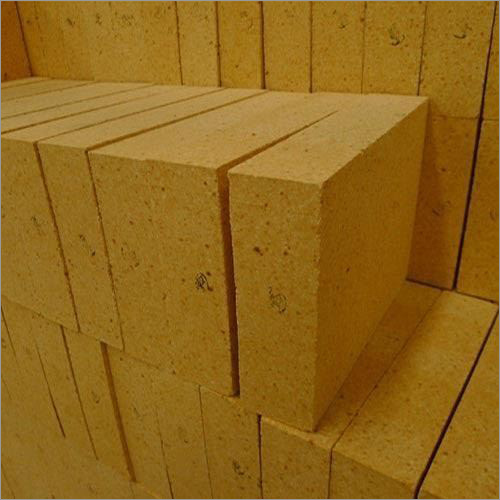
More Products in Thermax Refractory Bricks Category
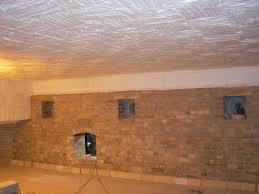
THERMAX BOILER LINING
Color : Grey
Material : Other, Highgrade Refractory Castable
Fe2O3 (%) : 1.2
AI2O3(%) : 45
Shape : Other, Rectangular Blocks
Refractoriness : 1700°C
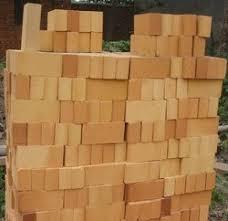
THERMAX BRICKS
Color : Light Yellow
Material : Other, Fireclay, Alumina
Fe2O3 (%) : 2.05%
AI2O3(%) : 38.90%
Shape : Other, Rectangular (Brick Shape)
Refractoriness : 1790°C
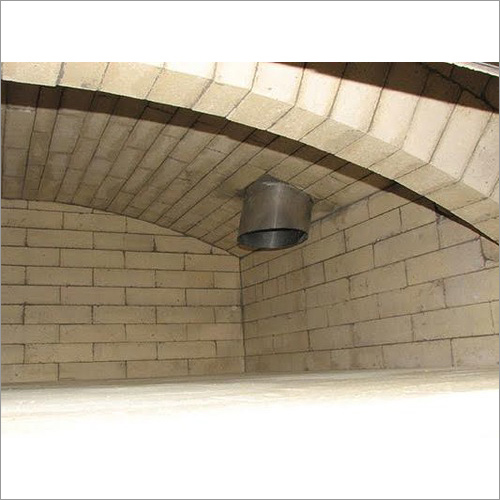
Thermax Boiler
Color : Blue
Material : Other, Mild Steel
Fe2O3 (%) : 4%
AI2O3(%) : 21%
Shape : Other, Horizontal
Refractoriness : High

We mainly deal in Chandigarh, Delhi, Haryana, Himachal Pradesh, Jammu and Kashmir, Madhya Pradesh, Uttar Pradesh, Punjab, Rajasthan, Uttarakhand etc.

 Send Inquiry
Our Products
- Refractory Material
- Boiler Nozzle And Spare Parts
- High Alumina Products
- Fire Bricks
- Refractory Cement And Castables
- Thermax Refractory Bricks
- Furnace Refractory
- Boiler Refractories
- Refractory Bed Material
- Refractory Bricks Joining Service
- Refractory Lining
- Thermax Boiler Construction Service
- Boiler furnace Work

Plot No. 2, Samaypur Road, Rajeev Colony, Near Sector-58,Faridabad - 121004, Haryana, India

Mr Kapil Vashisht
(CEO)
Mobile :View Number
 Send Inquiry
 Send SMS
Developed and Managed by Infocom Network Private Limited.